
LAUNCH YOUR COURSE TODAY
For independent facilitators, sole traders, small comedy clubs, writers’ groups and small creative businesses.
Review the licence agreement here.

For arts centres, libraries, councils, community organisations, festivals and larger workshop providers.
Review the licence agreement here.

For schools, universities, colleges, registered training organisations and larger education providers.
Review the licence agreement here.

| Permitted use | Independent | Community Most flexible | Institution |
|---|---|---|---|
| Complete course package | ✓ | ✓ | ✓ |
| Paid courses and workshops | ✓ | ✓ | ✓ |
| One authorised facilitator | ✓ | ✓ | ✓ |
| Up to five facilitators | – | ✓ | ✓ |
| Multiple simultaneous cohorts | – | ✓ | ✓ |
| Organisation-wide use | – | – | ✓ |
| Formal or accredited delivery | – | – | ✓ |
| Formal use of assessments | – | – | ✓ |
Review the Frequently Asked Questions and the licence agreements for more details: Independent | Community | Institution.
Need a multi-year, multi-site, or shared licence?
Learn from the comedy that shaped generations.
Write the comedy that shapes the next.
The 2026 edition draws on more than 70 years of comedy across film, television, stage and stand-up, exploring why stories like Fleabag, Ted Lasso, The Office, Seinfeld, Parks and Recreation, Abbott Elementary, Bluey, Barry, The Good Place and What We Do in the Shadows connect so powerfully with audiences.
Alongside modern favourites, you'll study timeless classics including Monty Python, Fawlty Towers, Blackadder, Airplane!, Groundhog Day, When Harry Met Sally, Ghostbusters and Hot Fuzz to uncover the enduring principles behind great comedy.
The course also explores the work of influential comedy writers and performers including Tim Ferguson, Phoebe Waller-Bridge, Tina Fey, Amy Poehler, Richard Curtis, Edgar Wright, Steve Kaplan, Issa Rae, Mindy Kaling, Ali Wong, John Cleese, Michael Schur, Taika Waititi, Jemaine Clement and many more. Rather than simply analysing what makes these creators funny, you'll learn practical techniques you can apply to your own writing, developing original monologues, sketches, sitcoms, feature films and online content.
Whether your goal is to write for the screen, perform stand-up, create digital content or simply become a stronger storyteller, you'll learn from some of the world's most celebrated comedy voices while developing a creative voice that is unmistakably your own.
WHAT DO YOU GET?
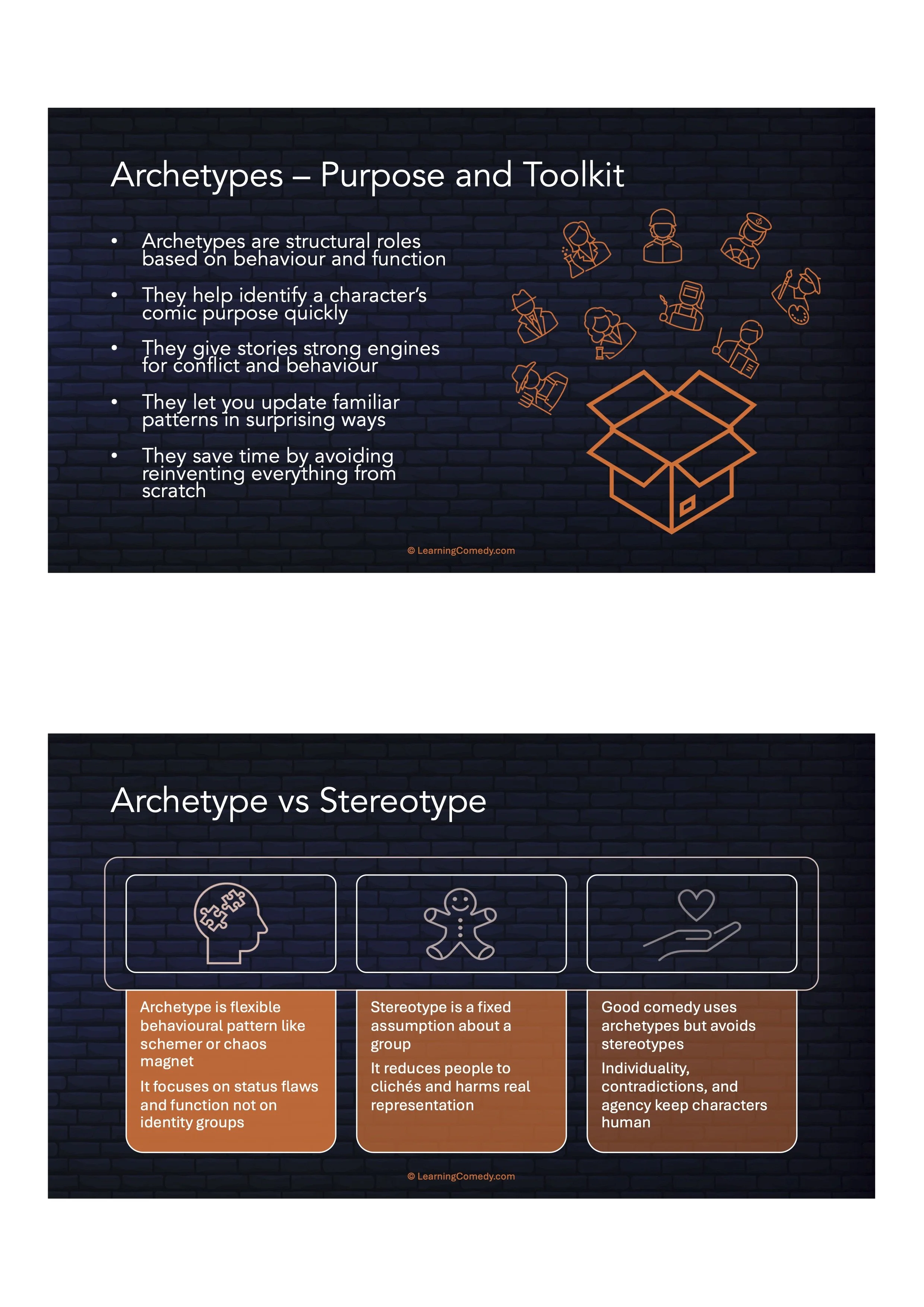
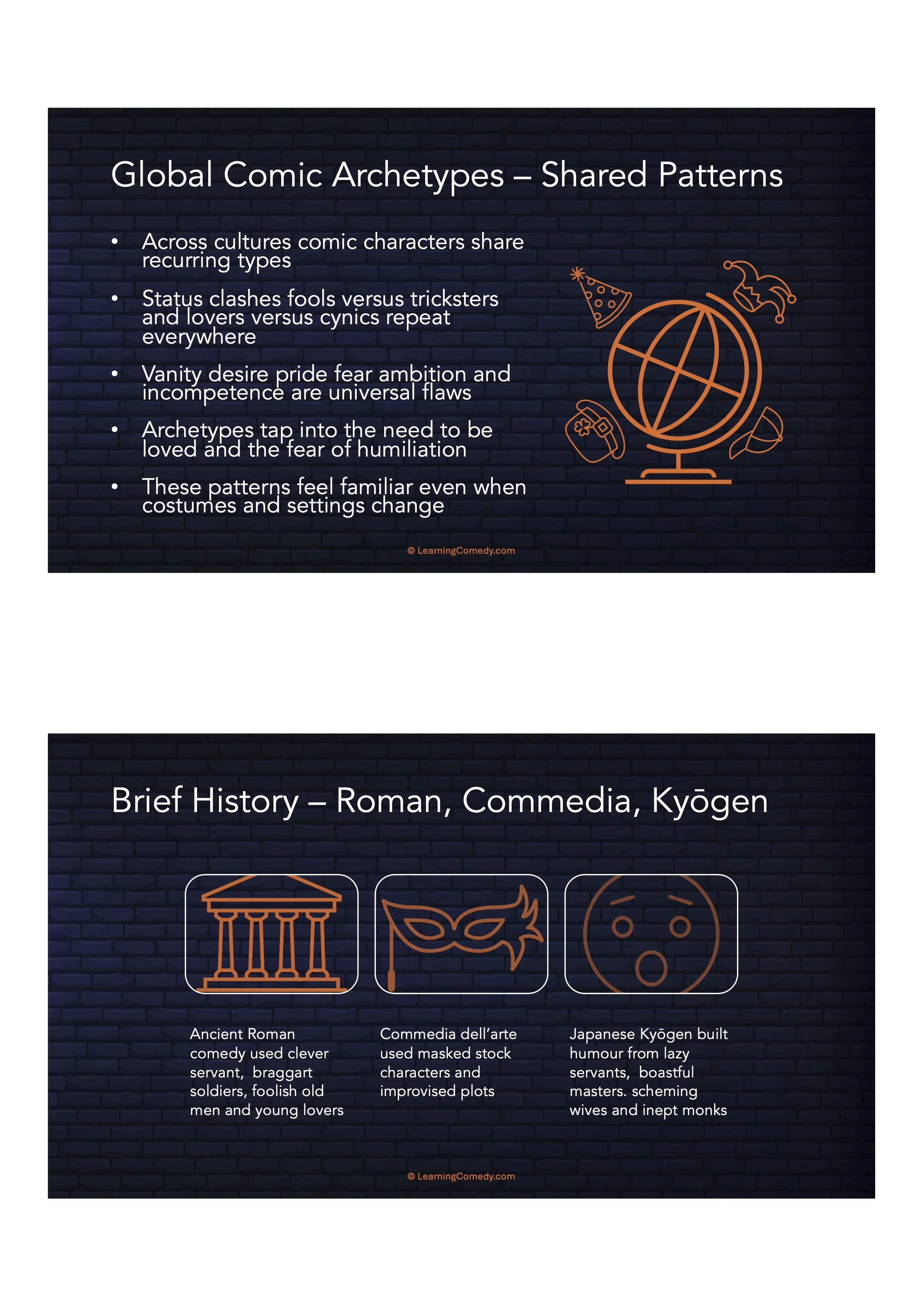
Complete presentation slide packs for every lesson
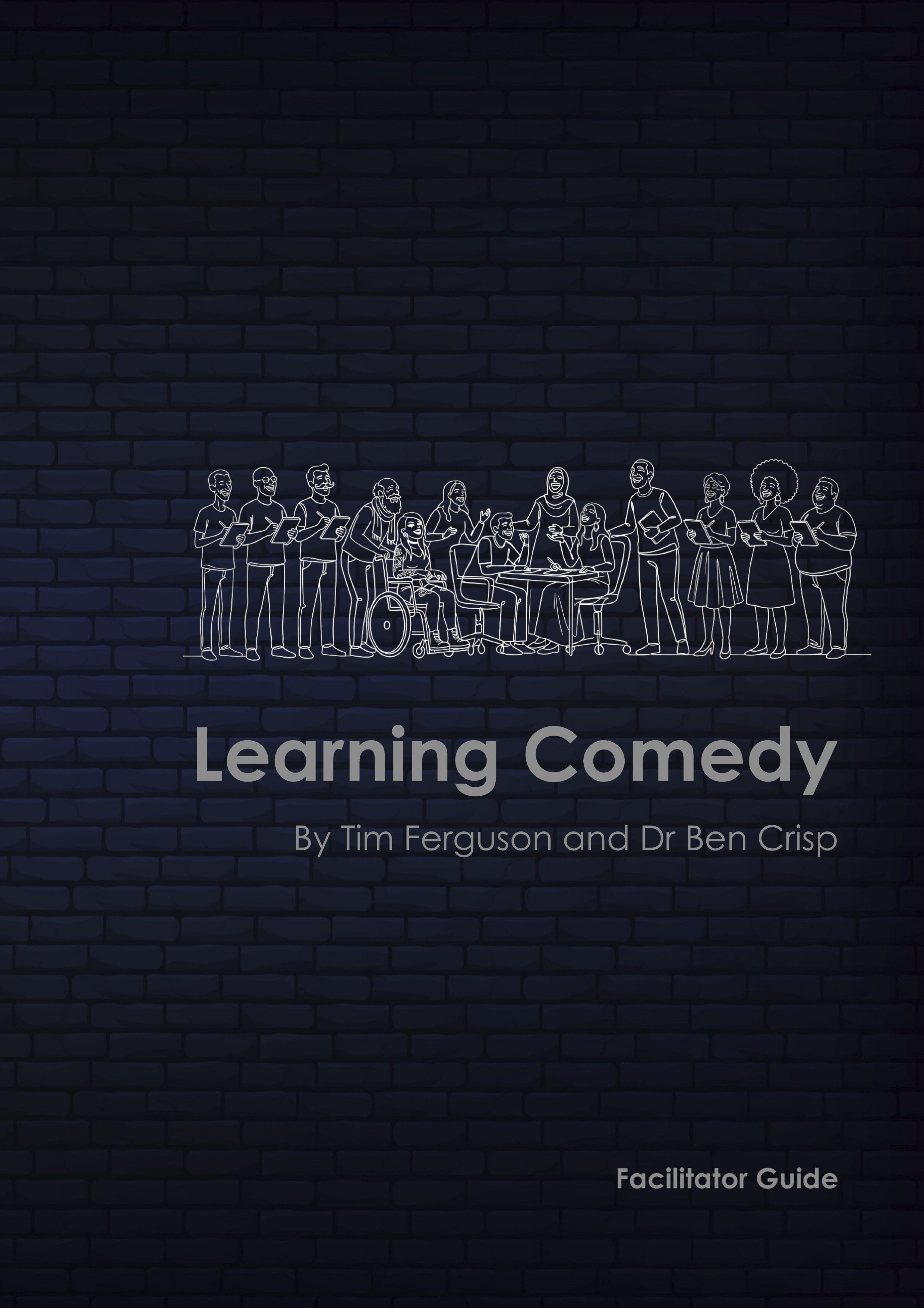
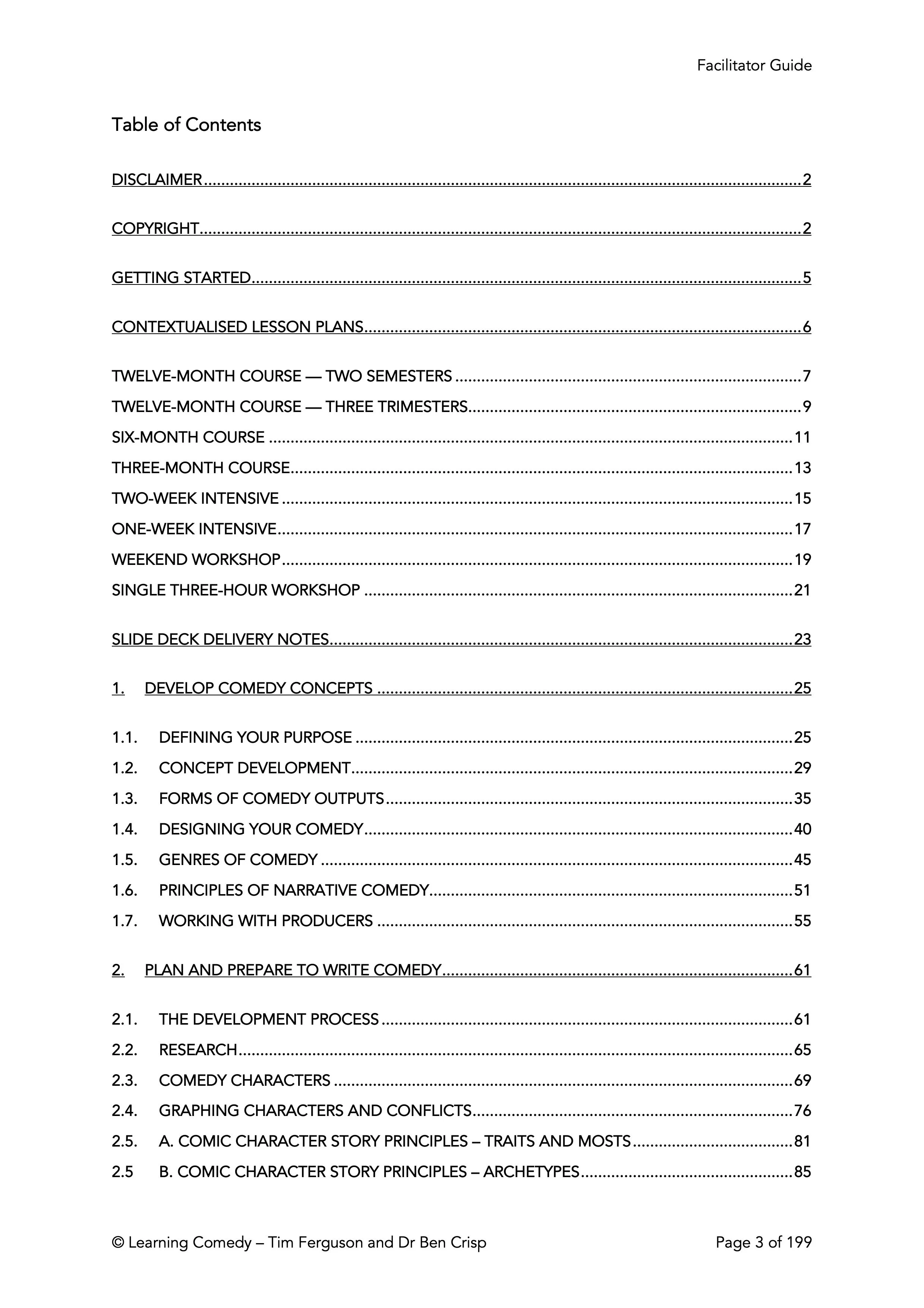
Facilitator Guide with teaching notes and delivery guidance
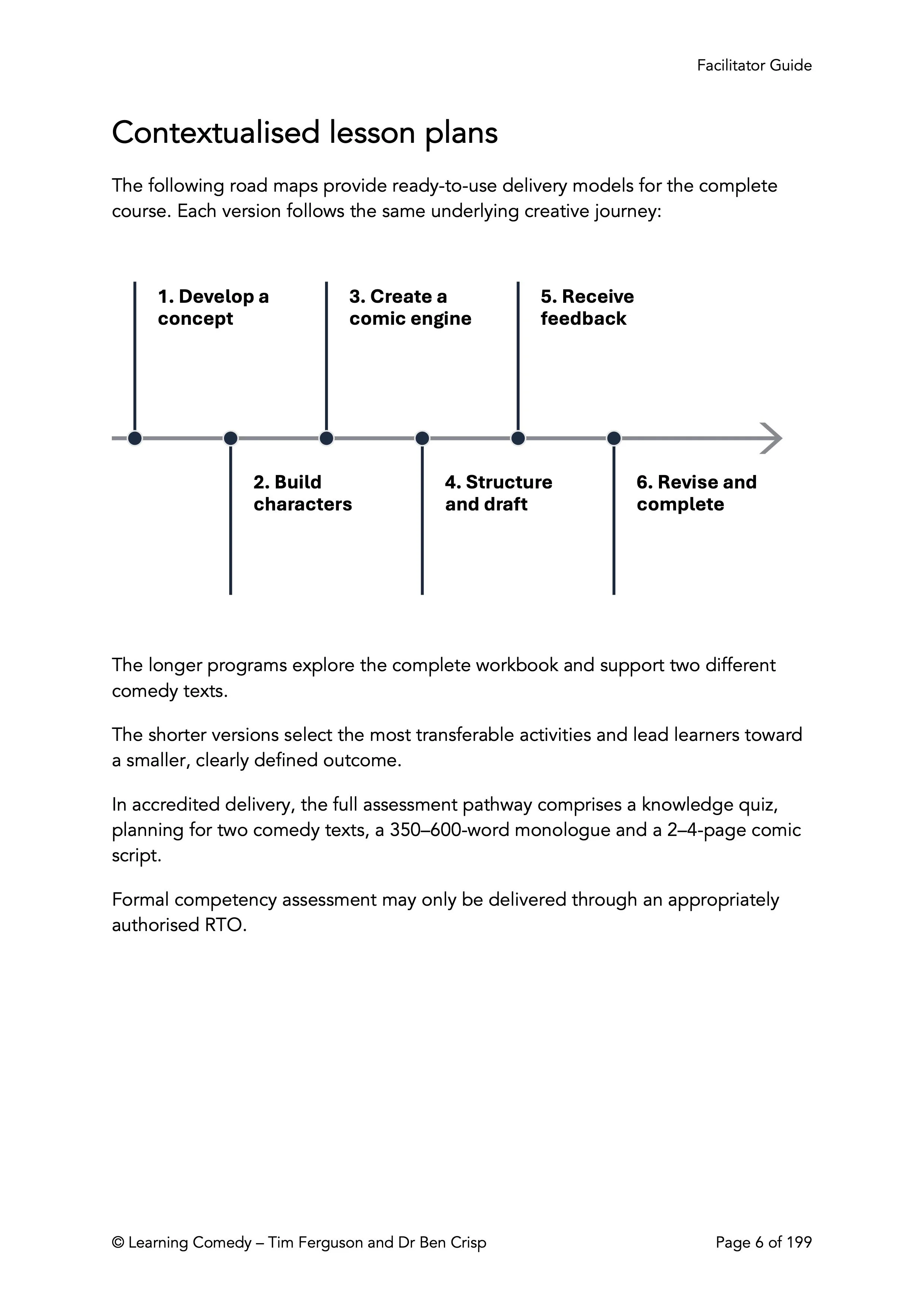
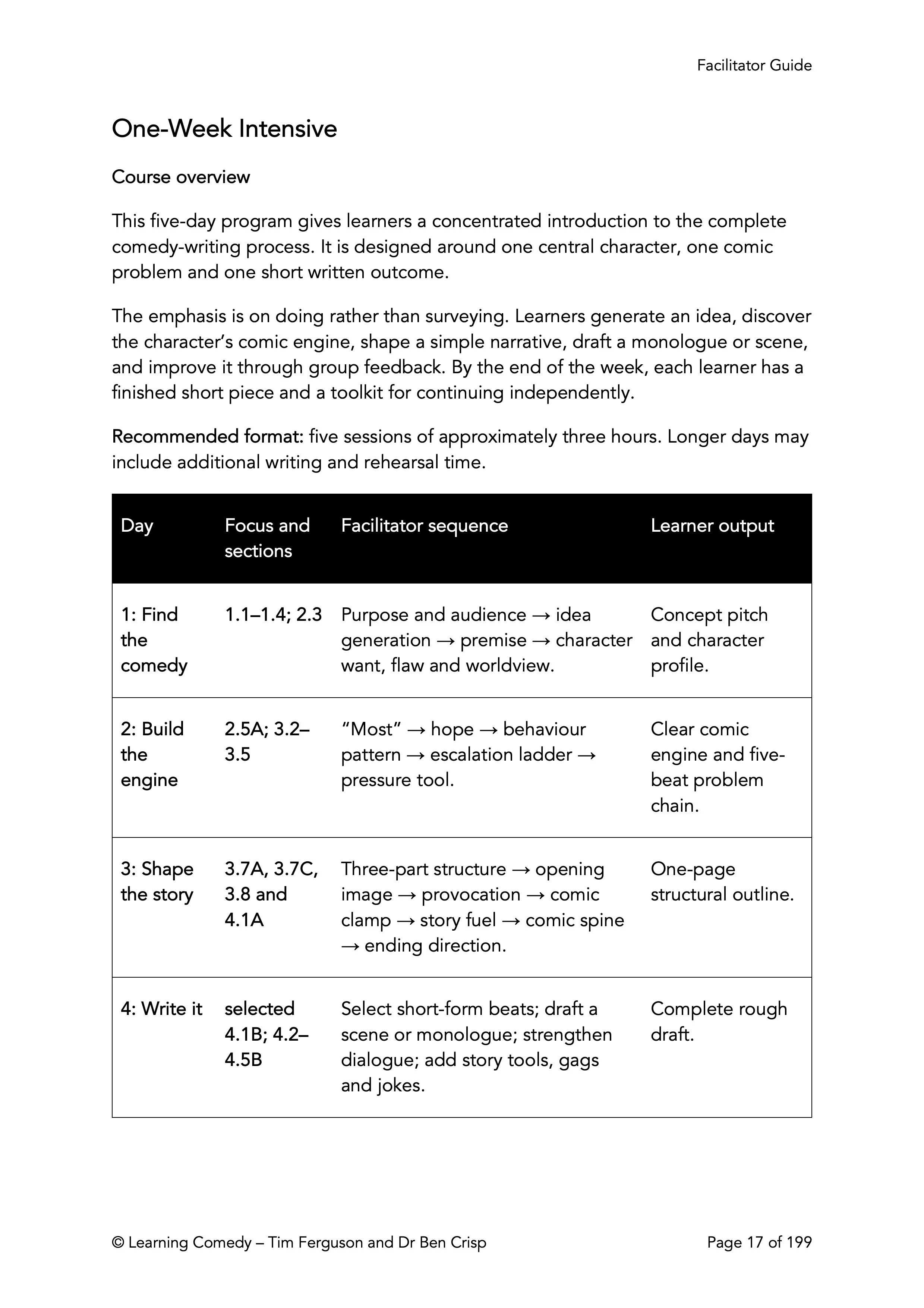
Flexible delivery plans for courses ranging from three hours to twelve months
Lesson plans, activities and discussion prompts
Workshop, intensive, term and extended-course schedules
Examples drawn from comedy writing, television, film, performance and other formats
Practical exercises for developing concepts, characters, stories and jokes
Guidance for providing feedback, editing work and supporting final projects
Editable teaching files for contextualising delivery
Annual updates with refreshed examples, references and activities
Teaching slides and resources



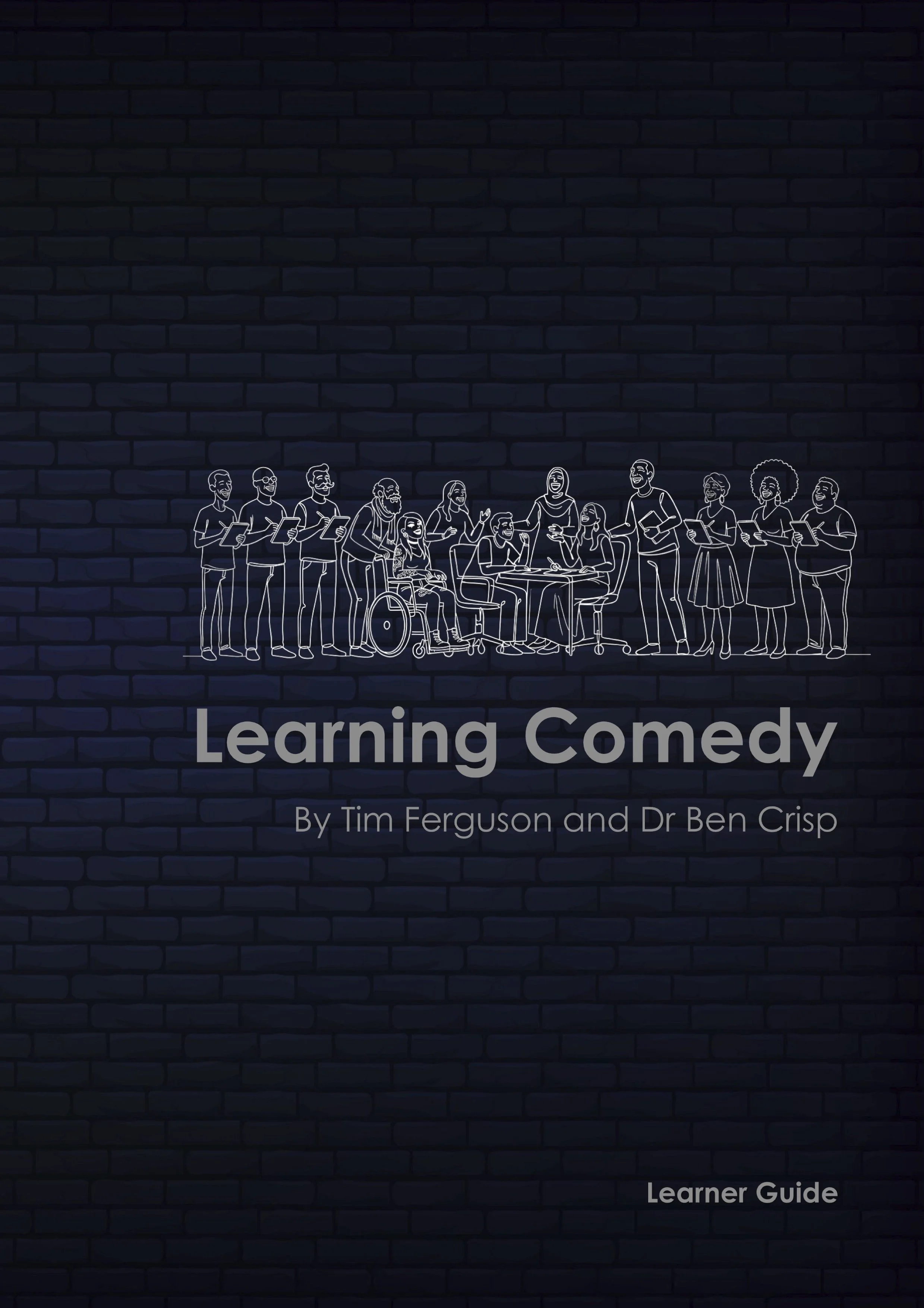
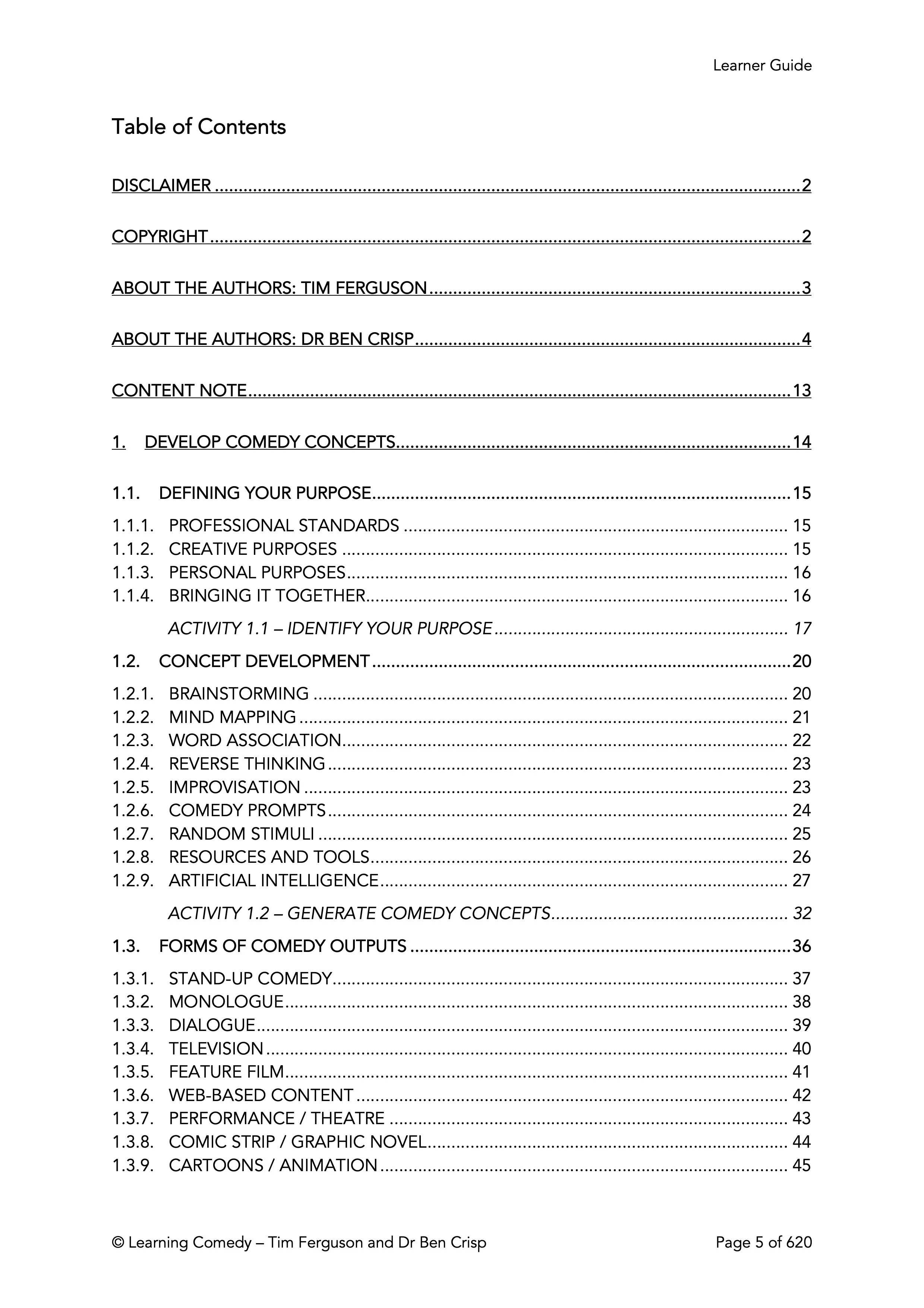
Comprehensive Learner Guide covering the complete course
Practical writing activities and creative development exercises
Templates, planning tools and worksheets
Examples and explanations of key comedy-writing techniques
Learner Assessment Workbook
Project tasks supporting the development of original comedy work
Reflection, feedback and self-evaluation activities
Resources suitable for printing or secure digital distribution
Materials that can be adapted for different learner groups and course lengths
Assessor Marking Guide for evaluating completed assessment work
Learner resources
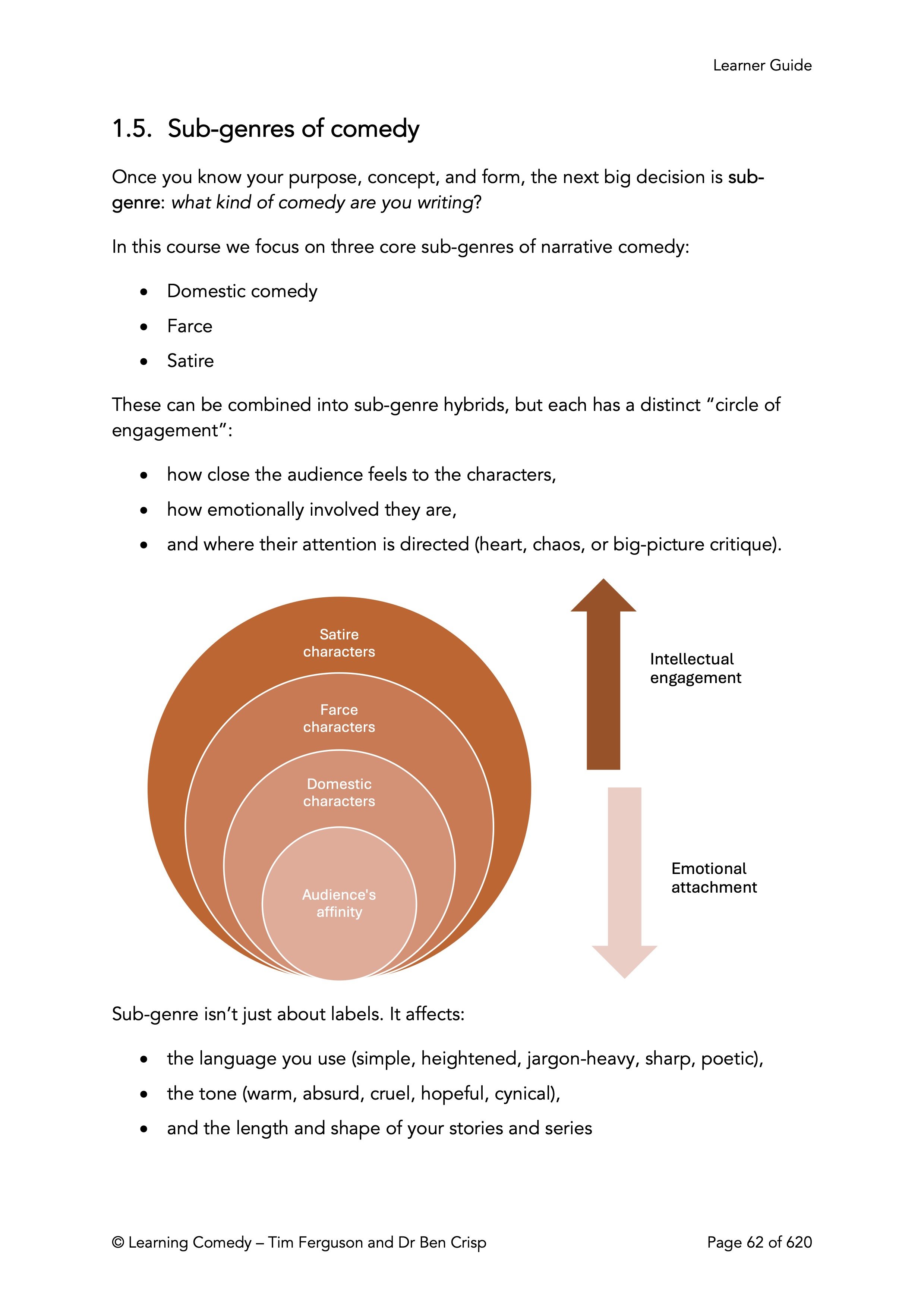
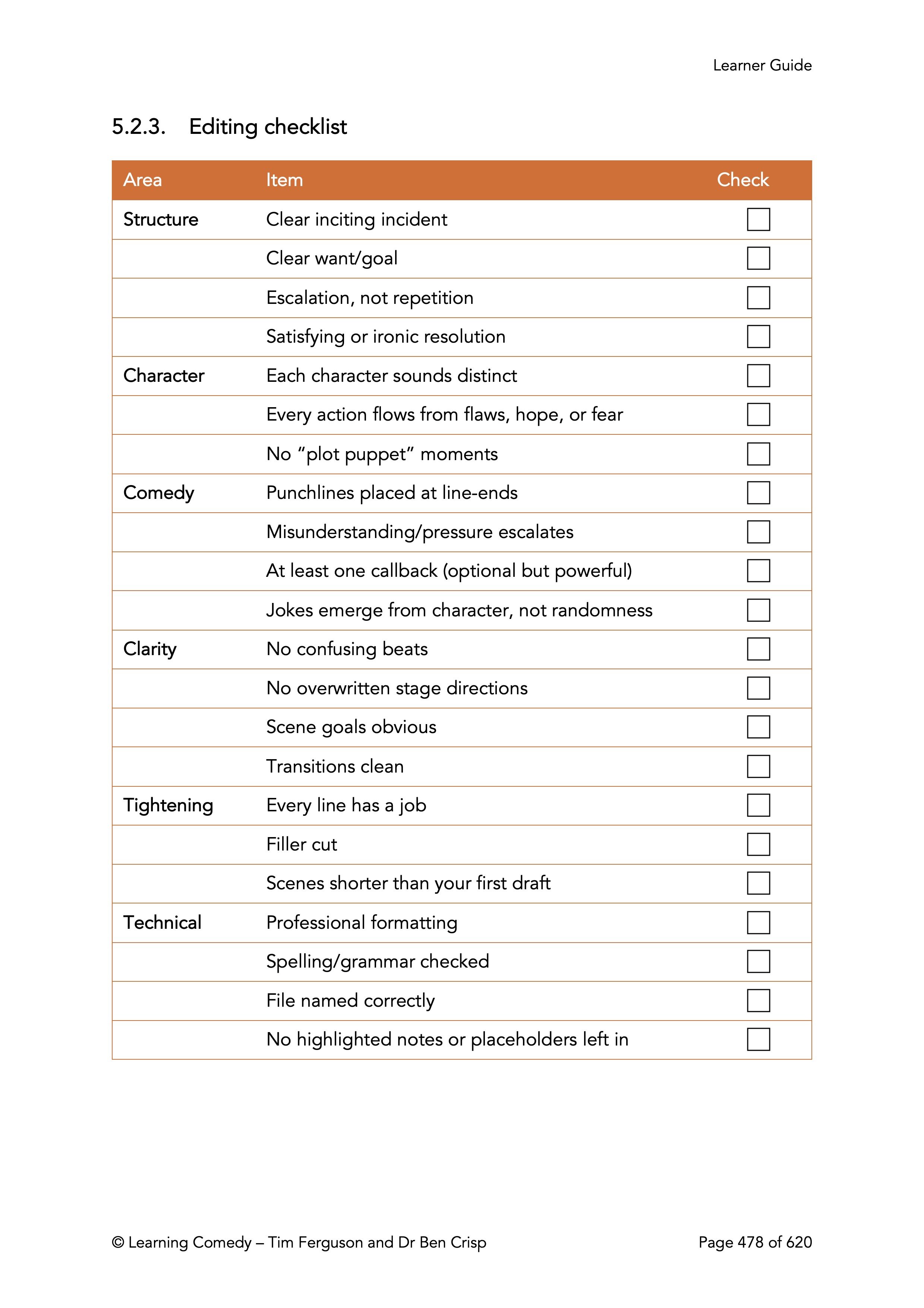
Ready-to-use course descriptions
Summaries of each available delivery format
Suggested course schedules and program structures
Learner and facilitator getting-started information
Guidance for selecting the most suitable course format
Promotional copy for websites, brochures and enrolment pages
Suggested learner outcomes and course benefits
Course administration templates and supporting information
Materials that can be branded and contextualised for your organisation
Permission to set your own participant fees and retain the revenue from delivery
Marketing and course administration
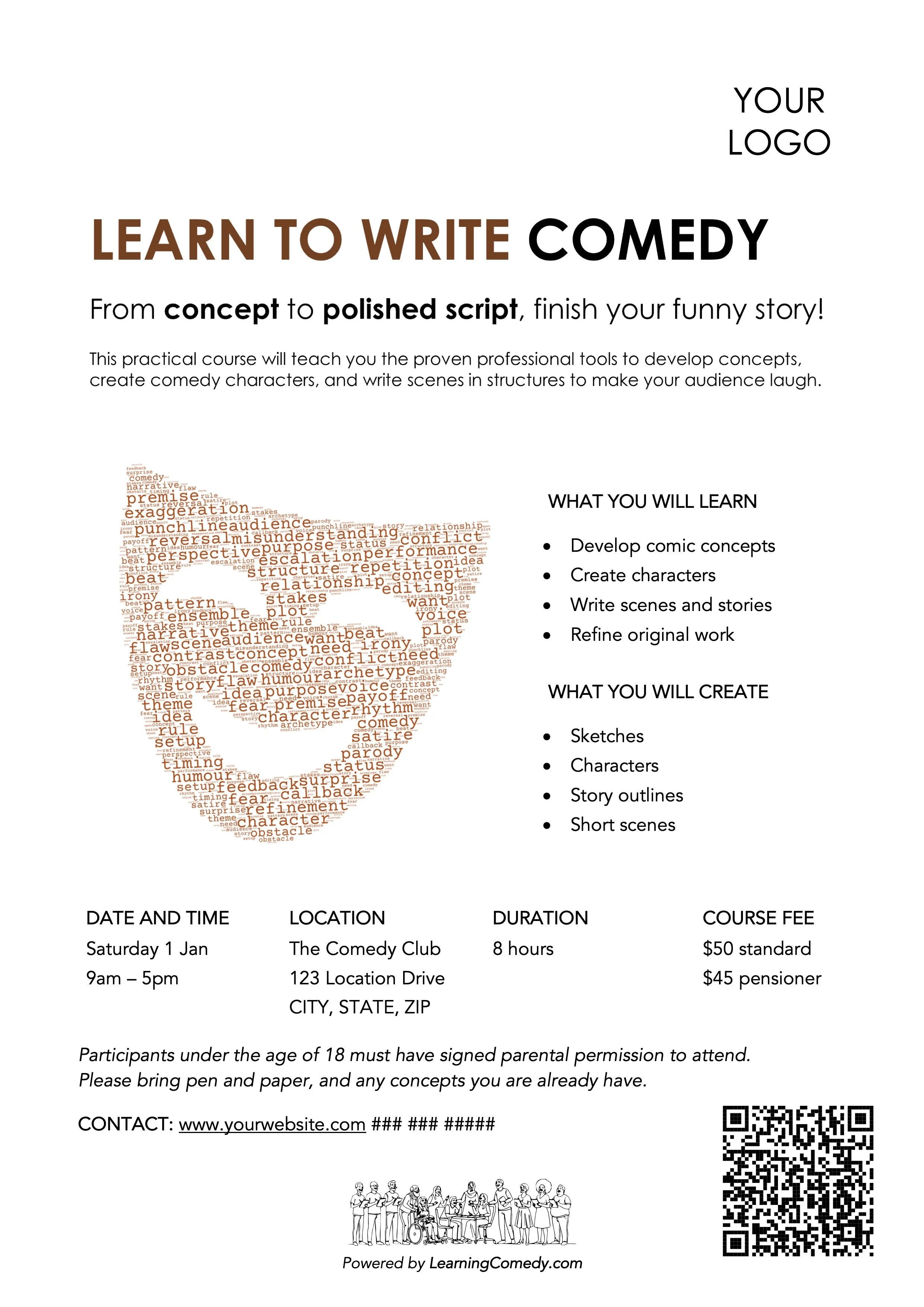
FAQs:
content and examples
-
The course explores comedy writing across television, film, live performance, online media and other written or screen-based formats.
It includes discussion of:
comedy concepts and purpose
characters and comic perspectives
story structure and narrative tools
joke construction
feedback and editing
professional, ethical and copyright considerations.
Examples are used to explain writing techniques rather than to prescribe one style, genre or approach to comedy.
-
Not necessarily.
Comedy can involve mature themes, offensive language, sexual references, social and political topics, stereotypes or material that some learners may find confronting. The course discusses these issues as part of understanding how comedy works and how writers can make responsible creative choices.
Facilitators and organisations should review the materials before delivery and decide which examples, activities and discussions are appropriate for their learners, age group, community and organisational policies. Examples may be replaced or omitted where needed.
-
Yes.
Licensees may replace, update or supplement examples to suit:
learner age and experience
cultural and community context
local policies
accessibility needs
current events
the interests of a particular group
the facilitator’s area of expertise.
Reasonable contextualisation is encouraged, provided copyright notices and attribution remain in place and the adapted materials are not republished or resold as a separate course product.
-
The materials link to publicly available videos hosted on public-facing official distributor, production company, broadcaster, creator or content-platform YouTube and media channels wherever practical.
The videos are not copied into or embedded within the supplied course files. Learners and facilitators follow the link to view the content in its original online location.
Links may change, become unavailable or be restricted by location, age, account settings or the platform. Facilitators should check linked examples before each delivery and prepare an alternative where necessary.
-
The course licence covers the Learning Comedy materials, but it does not grant additional rights over third-party films, television programs or online videos.
Australian copyright guidance distinguishes linking from copying. Smartcopying advises that linking to online content generally provides a pathway to the original material rather than making a copy. It also advises that showing audiovisual material in an Australian classroom may be permitted for educational instruction in some circumstances under section 28 of the Copyright Act 1968. Downloading, copying, uploading, embedding within another resource, communicating through an online class, or using content outside a classroom may involve different considerations.
Schools, TAFE institutes, universities and other educational organisations should review their own copyright policies, statutory or institutional licences, platform terms and educational-use allowances before embedding, downloading or showing third-party videos. The organisation remains responsible for determining whether its intended use is permitted.
This information is provided as general guidance and is not legal advice. Organisations needing advice about a particular use should consult their copyright officer, relevant education authority or a qualified copyright adviser.
-
The course is intended to be reviewed and updated regularly, including through newer comedy examples, references and links.
However:
not every file or example will change each year
third-party links may be removed or altered without notice
access may vary between countries and platforms
some examples may become less suitable over time
current events or changing community standards may affect how an example is received.
An active licence provides access to updates released during the licence period. Facilitators should still review all examples before delivery and use their professional judgement about suitability, availability and relevance.
FAQs:
learners
-
The course may appeal to people interested in comedy, writing, storytelling, screen, theatre, podcasts, performance or online content.
No previous comedy-writing experience is required.
-
Learners can develop skills in:
generating ideas
writing characters and dialogue
structuring stories and jokes
editing creative work
giving and receiving feedback
understanding audience and purpose.
-
No.
The main focus is writing. Readings, performance and sharing activities can be adapted or made optional.
-
Yes.
Facilitators can adjust prompts, scaffolding and extension activities for beginners and more experienced writers.
-
Yes.
Resources, activities, timing and participation methods may be adjusted to support different learners.
The delivering organisation remains responsible for reasonable adjustment and accessibility requirements.
FAQs:
facilitator and delivery requirements
-
The course can be taught by comedy practitioners, writers, performers, teachers or experienced creative facilitators.
Organisations remain responsible for selecting appropriately qualified and experienced facilitators.
-
Not for informal workshops.
Schools, colleges, universities and accredited providers must meet their own staffing, qualification and regulatory requirements.
-
Most sessions require:
a computer
a projector or screen
speakers
internet access
a whiteboard or similar workspace.
Printed or digital learner resources should also be available.
The course is also well-suited to teaching online in a virtual learning environment, using video conferencing and presenting and screen sharing.
-
No.
Learners can complete the course using a notebook, word-processing software or another accessible writing method.
-
Not necessarily.
Activities can be completed on paper, shared computers or personal devices, depending on the delivery setting.
-
A standard classroom, meeting room, library space or community venue is usually sufficient.
Space for small-group discussion and optional readings or performances is helpful.
FAQs:
Choosing YOUR licence
-
Every licence includes the complete comedy writing course package:
Learner Guide
Facilitator Guide
full slide decks
workshop and extended-course delivery plans
activities and templates
assessment materials
marking resources
updates released during the active licence period.
The licence level determines how the materials may be used, not which files you receive.
-
Choose based on who will deliver the course and the context of delivery.
Independent Licence: for one facilitator or sole trader.
Community Licence: for organisations using up to five facilitators.
Institution Licence: for schools, colleges, universities, RTOs and organisations using the materials in formal or accredited education.
-
No.
The same licence may be used for a three-hour workshop, short course, intensive, semester program or extended twelve-month course.
The licence is based on who uses the materials and how they are delivered.
-
Yes.
The resources are designed so you can begin with a single workshop and expand into longer delivery when demand develops.
-
Yes.
You can upgrade if you add facilitators, expand organisational use or begin formal or accredited delivery.
The amount already paid for the current licence period will normally be credited towards the higher licence fee.
-
Yes, at renewal.
You may select a lower licence if your use has changed and meets the lower licence conditions. Downgrades do not normally apply partway through a licence term.
FAQs:
Delivering courses and earning revenue
-
Yes.
You may set your own fees and retain all income generated from your programs.
We do not charge royalties, per-participant fees or a percentage of your revenue.
-
No.
You do not need to report participant numbers, course fees, revenue or profits.
-
Yes.
You may deliver recurring workshops and courses throughout your active licence period.
-
Yes.
An Independent Licensee may deliver at hired venues, comedy clubs, libraries, arts centres, festivals, client premises or online.
The licence is linked to the authorised facilitator, not to one physical location.
-
Community and Institution Licensees may run multiple simultaneous cohorts.
Independent Licensees may deliver multiple programs, but the named facilitator must personally deliver each one.
-
Usually, yes, where the program is non-accredited and the community provider controls the delivery.
An Institution Licence is required where the education provider receives ongoing access, uses its own staff or incorporates the materials into formal delivery.
Contact learningcomedy.mail@gmail.com where the arrangement involves shared delivery.
FAQs:
Facilitators, organisations and partnerships
-
Under the Independent Licence, only the named facilitator may teach from the materials.
Choose a Community Licence where more than one facilitator needs access.
-
Yes, under Community and Institution Licences.
They may use the materials while delivering for the licensed organisation, but not for their own business or another organisation.
-
Administrative or technical staff may access materials where reasonably required to support delivery.
They must not independently teach from, reuse or distribute the materials.
-
No.
A standard licence applies to one legal entity.
Another organisation may provide a venue, promotion or administration, but it does not receive independent delivery rights.
-
Possibly.
Contact learningcomedy.mail@gmail.com if two organisations both need ongoing access or delivery rights. A group, partnership or separate licence arrangement may be required.
-
Yes.
Multi-year licensing, annual invoicing, purchase orders and procurement arrangements may be available.
Contact learningcomedy.mail@gmail.com to discuss your requirements.
FAQs:
Adapting and sharing the materials
-
Yes.
You may:
replace examples
adjust activities
change schedules
shorten or resequence lessons
add local content
adapt language
make accessibility adjustments.
-
Yes.
You may add your logo to delivery and learner-facing materials, provided the original copyright and attribution information remains visible.
-
Yes, where access is restricted to authorised staff and enrolled learners.
Public websites, unrestricted links and open file-sharing platforms are not permitted.
Organisation-wide LMS use requires an Institution Licence.
-
Learners may keep resources legitimately provided to them for their personal educational use.
They may not publish, resell, distribute or teach from them.
-
No.
The complete package must not be uploaded to public websites, shared through unrestricted links or distributed outside the licensed organisation.
-
No.
You may charge for teaching programs delivered using the materials, but you may not sell the files, sublicense the package or create a competing curriculum product from them.
FAQs:
Assessment and formal education
-
Yes.
All licensees receive the assessment and marking materials.
Independent and Community Licensees may use them as:
practice activities
reflection tasks
portfolio prompts
informal feedback
non-accredited completion activities.
-
The assessment materials have been professionally designed for CUAWRT401 Write comedy in the Australian VET context.
They were developed by a qualified instructional designer who holds the TAE40116 Certificate IV in Training and Assessment and a Master of Education.
-
No.
The Institution Licence permits formal and accredited use, but it does not constitute accreditation, validation, regulatory approval or a guarantee of compliance.
-
Before accredited use, the provider remains responsible for:
confirming current unit requirements
mapping and validation
contextualisation
principles of assessment and rules of evidence
trainer and assessor requirements
accessibility and reasonable adjustment
internal and regulatory approvals.
-
Independent and Community Licensees may issue certificates of attendance, participation or non-accredited completion.
They must not imply that the course is accredited or nationally recognised.
-
Yes, under an Institution Licence.
This allows formal educational use, organisation-wide access and formal use of the assessment materials, subject to the provider’s own compliance obligations.
FAQs:
Licence terms, updates and support
-
Standard licences normally run for twelve months, unless a different term is shown at purchase or agreed in writing.
-
You may retain downloaded files for records and internal reference.
You may not continue teaching, distribute materials to new learners or begin new delivery unless the licence is renewed.
-
You must renew the licence or arrange a written extension before continuing delivery.
Contact EMAIL@ADDRESS.COM before the expiry date where a course overlaps the renewal period.
-
We intend to review and update the course regularly.
Updates may include new examples, recent shows and creators, revised references, corrected files and improved activities.
Not every file will necessarily change each year.
-
Refunds are not normally provided because delivery plans change, enrolments are lower than expected or the materials are not fully used.
This does not affect rights and remedies that cannot be excluded under applicable consumer law.
-
Standard support includes reasonable help with:
file access
identifying current versions
licence questions
selecting a delivery schedule
reporting file errors.
Facilitator training, custom course design, assessment validation, accreditation advice and LMS implementation are not automatically included.
YOUR ORGANISATION
For independent facilitators, sole traders, small comedy clubs, writers’ groups and small creative businesses.
Review the licence agreement here.
For arts centres, libraries, councils, community organisations, festivals and larger workshop providers.
Review the licence agreement here.
For schools, universities, colleges, registered training organisations and larger education providers.
Review the licence agreement here.